Episode #103: Bits of "Breaking Barriers": Marietta Robusti  (Season 12, Episode 4)

Episode #103: Bits of "Breaking Barriers": Marietta Robusti (Season 12, Episode 4)

ArtCurious Podcast

B2November 21, 202224 min
Play

Sponsor ArtCurious for as little as $4 on Patreon For this season of ArtCurious, I’m doing something a little bit different. I’m treating you to renditions of eight of my favorite segments from Breaking Barriers: Women Artists of Renaissance Europe, my online course found exclusively at avid.fm. Every other week through January, I’ll share selections from Breaking Barriers, and encourage you that if you like it, you can purchase the whole course. Today: Lots of women artists have gotten a head-start in their careers thanks to their families. Fathers, in particular, often led...

Transcript

Automatically generated from the audio. May contain errors.

If you love Art Curious, help us keep it going. Become a supporter at patreon.com slash artcurious for as little as $4 a month. Shout out to our ultra special VIP patrons, Andrew L, Flamestress, Gaston L, JL, Rhonda W, Robin J, John K, and Stephanie T.

Well, hello there, lovely listener. Welcome back to the Art Curious Podcast, where we explore the unexpected, the slightly odd, and the strangely wonderful in art history. If you've been following along this season, you'll know that this one is a little bit different than in the past,

because instead of our usual spate of new episodes, I'm taking some time off to research for a new book. So I'm sharing some slightly changed renditions of favorite segments from my special audio course, Breaking Barriers, Women Artists of Renaissance Europe. As you probably have heard me say at this point, this is a 21-day course, meaning that you essentially get a little

episode of Art Curious every day for three weeks straight, and you get this opportunity to learn about some artists that you may have never heard about before. This is three weeks with every day featuring the story of a new Renaissance painter, sculptor, miniature maker, on down. You can Register now for this evergreen course that's all about learning for fun.

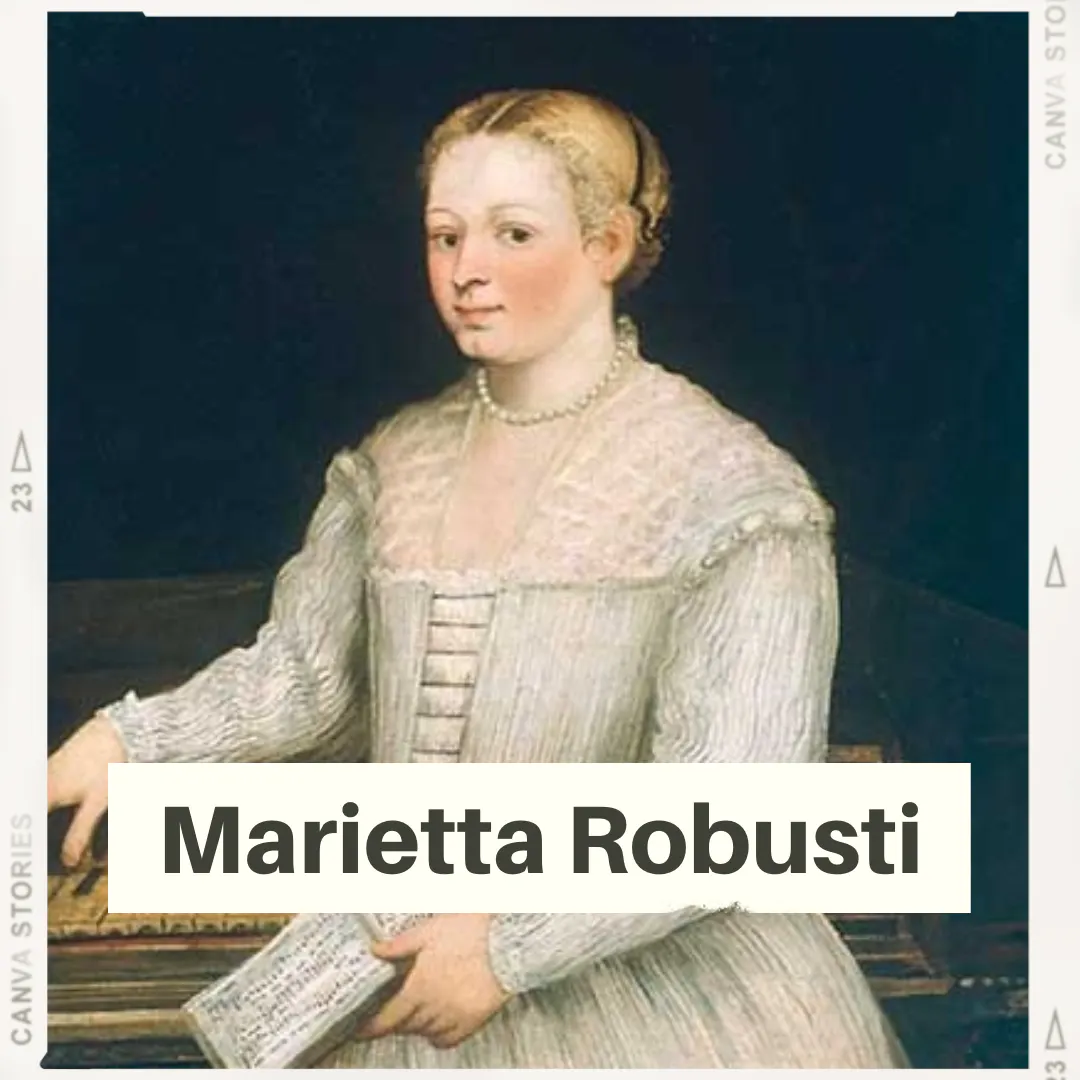
So again, no tests, no papers, just fun content that you can access on your own time at your own pace. Register now for the course and start learning at avid.fm slash Jennifer. In the meantime, please enjoy this favorite snippet of mine from Breaking Barriers, which is all about the life and work of the tragic but talented artist Marietta Robusti,

the daughter of the Venetian master Tintoretto. Please enjoy. Welcome back, listeners, to Breaking Barriers, Women Artists of Renaissance Europe. We are heading back to Italy today to take a stop in Venice, that most serene floating city,

to talk about one of art history's most talented father-daughter pairings. While the combination of artist and child isn't a rare one in art history, it's a particularly fascinating dynamic when the parent and not the child is the greater name, the bigger draw. Because I've always wanted to know, what is it like to grow up in a household with a supremely successful artistic parent?

What is it like to follow then in that parent's footsteps in trying to achieve parity, or at least passability, in the same world in which he or she flourishes? It can't be easy. And it can't have been easy for Marietta Robusti. And certainly if she was with us today, she could let us know.

And that's because her dear old dad was Tintoretto, a Venetian Renaissance painter born Jacopo Robusti and named Tintoretto or Little Dyer or the Dyer's Little Son because his father had been a fabric dyer or a tintore in Italian. Tintoretto painted in a bold, mannerist style and with such speed and energy that his contemporaries sometimes called him Il Furioso, literally meaning the furious one. His brushy paintings are so suffused with excitement that you can almost feel them moving. And while he was personally known to be a kind and agreeable soul, he did spend most of his time, quote,

thinking of ways to make himself known as the most daring painter in the world, as his biographer, the author Carlo Rodolfi, noted. Tintoretto was daring. Tintoretto went big, both in works and personality. Tintoretto wanted to do it all. And Tintoretto also sought to teach all of this to his eldest daughter, Marietta.

Born around 1560, although some historians think she may have been born in 1555, Marietta was the eldest of Tintoretto's eight children and appears to have been born out of wedlock, with her mother unknown to historians today. Tintoretto subsequently married another woman, and it was with her that he sired his additional seven kids.

From the outset, Marietta was always identified with her father, not only as one of his assistants, and we will get to that shortly, but also in her name. As in Italian tradition and in following her father's footsteps, when she wasn't being identified with her full and proper name, Marietta Robusti,

she was called La Tintoretta, or sometimes just Marietta Tintoretto. She was known by all, primarily under the name of Tintoretto's daughter, and Marietta then could not escape her father. Although this was the case for many women in Renaissance Italy's patriarchal society, you've got to wonder how much this affected a girl, especially one standing right there

in the artistic shadows of her father's massive successes. As we've discussed previously, both in Art Curious podcast episodes and in this course, Breaking Barriers, women's access to traditional art schools, nude drawing classes, anatomical studies, and the like were thoroughly limited up until the 19th century and even later in some locations.

So it's lucky that Marietta was raised by a father who was himself an artist because he could teach her directly and she could learn his methods and artistic techniques within the privacy of their own home, so that neither of them would be subjected to any criticism

from the realm outside their own halls. Tintoretto could feel safe in knowing that he didn't have to send his daughter to be an apprentice elsewhere, potentially opening her and potentially him up for criticism.

And Marietta could be comfortable in getting this top-notch education with someone whom she both loved and trusted innately. From all accounts, Tintoretto essentially treated his daughter as he would have any typical apprentice, allowing her to complete sections of his own works, such as minor details and background elements in his paintings,

which was not only a common and very hands-on way to learn the job, but also to have someone assist in a master painter's busy schedule. In this way, father and daughter worked together, forming this symbiotic relationship, with each helping the other to become an artist in their own ways.

There is more to Marietta's tale. We are digging deeper right after a quick break from today's sponsors. Thank you for listening.

This is the opening of the episode. Open the player for the full interactive transcript with clickable words, translation and flashcards.

Open full transcript

Audio belongs to its publisher and is played from their feed. Rights holders can request removal — copyright & takedown policy

Episodes · ArtCurious Podcast