Bee Venom Therapy with Marilyn Murray Willison

Bee Venom Therapy with Marilyn Murray Willison

Free Thinking with Montel

B1July 1, 202535 min
Play

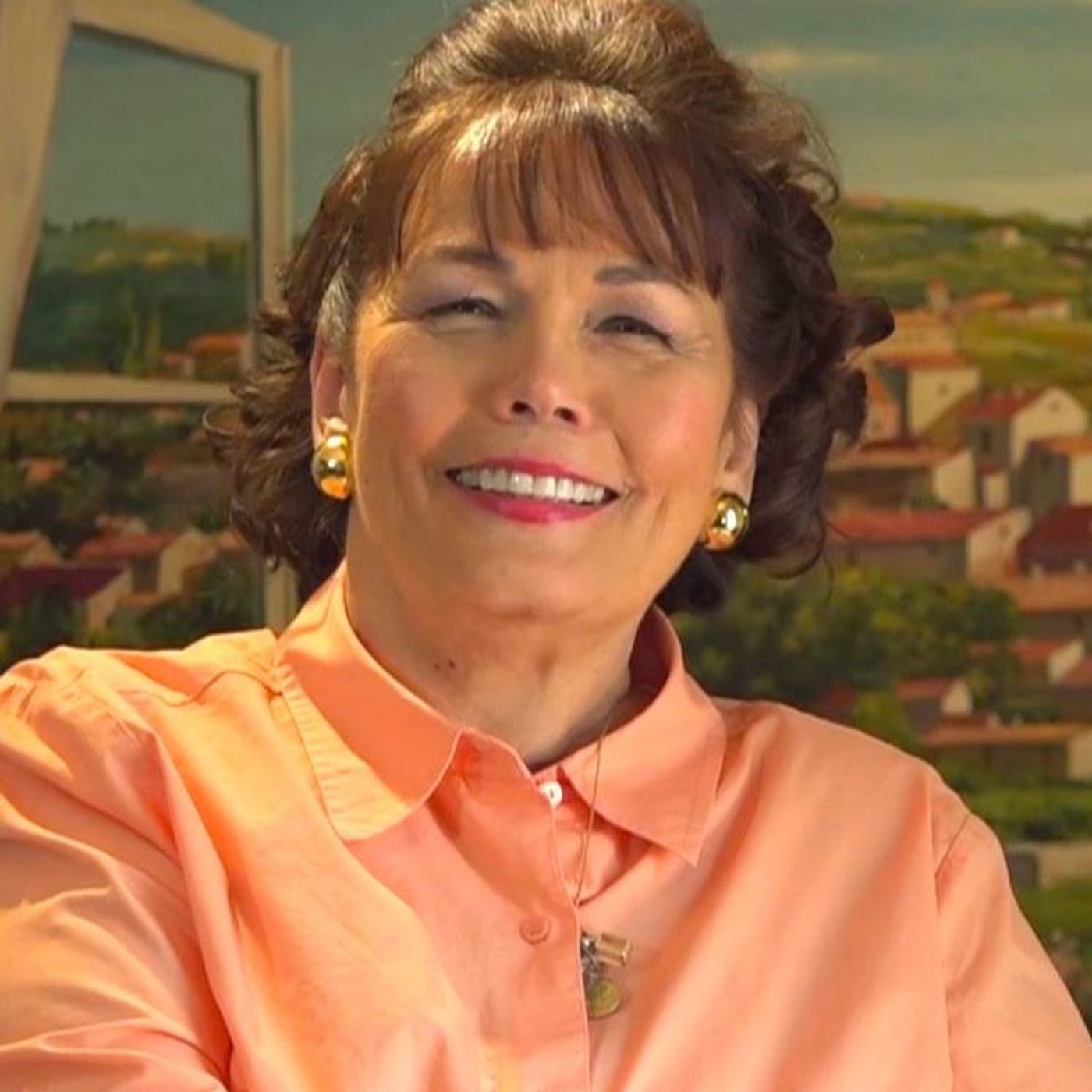
What do honeybees and hope have in common? Prepare to be inspired by Marilyn Murray Willison, a renowned journalist, author of What the Honeybees Taught Me, and someone who has fearlessly redefined living with multiple sclerosis (MS). Diagnosed in 1984, Marilyn chose an unconventional path to manage her condition: Bee Venom Therapy (BVT). In this episode, she opens up about her 5-year commitment to a therapy that involves 50 bee stings a week, how it halted her MS progression, and the invaluable life lessons she’s learned from honeybees. Montel dives deep into Marilyn’s fascinating story, disc...
Transcript

Automatically generated from the audio. May contain errors.

Hey Montel Williams here. Look I've got some incredible news to share with you. I want to tell you about my brand new book that's coming out that's called The Sailing of the Intrepid. This book is more than just an historical account. It's a tribute to the brave men who served aboard the USS Intrepid

and a celebration of their extraordinary legacy. Writing this book was such an incredible story and I'm really thrilled to be able to share it with you. So don't wait to grab your little piece of history.

The book is available right now to order. You can go to Montelmedia.com and you can even get a limited autograph signed copy. Now thank you so much for your support. I can't wait for you to read this incredible story

of the sailing of the Intrepid. I'll see you on the pages. ["Sailing of the Intrepid"] Well, hey guys, welcome back to another episode

of Free Thinking with Mantao. I'm your host, Mantao, and today we're exploring a fascinating fusion of health, resilience, and the natural world.

Our guest is someone whose incredible story has captured attention across the globe. Marilyn Murray Willison is here to share her unexpected and inspiring journey with multiple sclerosis

and an unconventional yet powerful therapy that's changed her life forever. She not only respected journalists, an eight-time author, an inspiring speaker,

but also someone who's lived boldly with MS are refusing to let it define her. Her latest book, What the Honeybees Taught Me, uncovers the remarkable impact of bee venom therapy,

the wisdom she's drawn from honeybees, and how it's improved her health and her outlook on life. It's important to remember that approximately 5% of American, of the American populations,

extremely allergic to bee venom. They can experience serious anaphylactic shock and stung. So bee venom therapy is not for everyone, but Marilyn, it's work for you,

So welcome to the show, my dear. Oh, thank you. Happy to be here. So good to have you.

Your story is truly remarkable from working as a health and fitness editor for the Los Angeles Times, syndicated to your incredible contributions as a journalist and author.

But the part of the true that truly stuck me is your courage and determination in the face of living with them as. Can you start by telling us a bit about your diagnosis

and how that led you to this fascinating realm of beat them therapy? Sure. Well, I was diagnosed way, way back in 1984.

I had a small role in the LA Olympics. And so I thought that I would take care of all my issues so that I would be free and clear for the Olympics. And I had elective toast surgery

or bone spurs on my toes. And I think that was the stressor that kind of opened the door for MS in my life. But for years, I just could not believe

that someone as healthy as I would have MS because I jogged, I rode horses, I danced. I was a very active person. And it began from, you know,

the people forget that every case of MS is different. But for my story, it first affected me in my legs and made walking difficult. And they call MS the slow stroke

because instead of things happening all at once, you have a gradual deterioration of function. So that's pretty much my situation. I've deteriorated gradually,

but there's no doubt in my mind whatsoever that without the B venom, I probably wouldn't even be here. I was told by a neurologist in London

that the average lifespan is 20 years from the date of diagnosis. And I've more than doubled that by avoiding chemicals and medications.

And so, you know, beach stains are not something that most people would be willing to sign up for. Can you walk us through your B venom therapy and how it works and what made you,

you know, give it a try despite its unique nature? Well, my late husband and I had seen a program back in the 1990s. I don't know if it was 60 minutes or a program like that that highlighted the story of a woman in near Washington, DC,

who had MS. And she had discovered that the bee stings helped her. And she was having people come to her home and stinging them and teaching them about bee venom.

And we couldn't, at that time, we couldn't find anybody here in South Florida who was available to help with that. And back in 2019, a friend of a friend finally found somebody who was,

they're referred to as apotherapists where they treat different challenges with BVNM. And so for five and a half years, every week I got 50 bee stings located primarily

on acupuncture points in the body. And I mean, can you describe, you know, your first experience with bee venom, bee venom therapy or what was like?

I was frightened number one because I didn't know anybody who'd done it. And I found that the bee stings did not hurt as much as I thought they would.

It kind of like an angry mosquito and it really hurts for about five minutes and then the pain dissipates. And what convinced me after I did a lot of reading and research

was that for decades, every neurologist or doctor or professional person I talked to about my MS, they all agreed that there's no cure, there's no improvement, that however you are today

is the best you will ever be that you're not going to improve. And I noticed that with the bee venom, almost immediately I saw improvements, very, very minor, very, very gradual, but instead of a decline,

which is all that you're told that will happen to you when you have MS, I was actually measurably, slowly, incrementally improving. And that was the encouragement I needed to put up

with the discomfort of the bee stings. So that was like for five years straight, you went once a week to get 50 shots, 50 shots. Yeah, actually the apotherapist comes to my home

with a jar of bees and very long tweezers. And they line up the bees on the table and then like start at my toes and they would go all the way to my head.

So, and as I said, they applied the stinger to what would be an acupuncture point on the body. So there's certain areas for your immune system, certain areas for resistance,

certain areas for pain relief. It's just they just have different areas where the B-Venom can be useful.

This is the opening of the episode. Open the player for the full interactive transcript with clickable words, translation and flashcards.

Open full transcript

Audio belongs to its publisher and is played from their feed. Rights holders can request removal — copyright & takedown policy

Episodes · Free Thinking with Montel