Richard Meagher was at the centre of early Australian politics. But he had a scandalous past
Late Night Live - Separate stories podcast
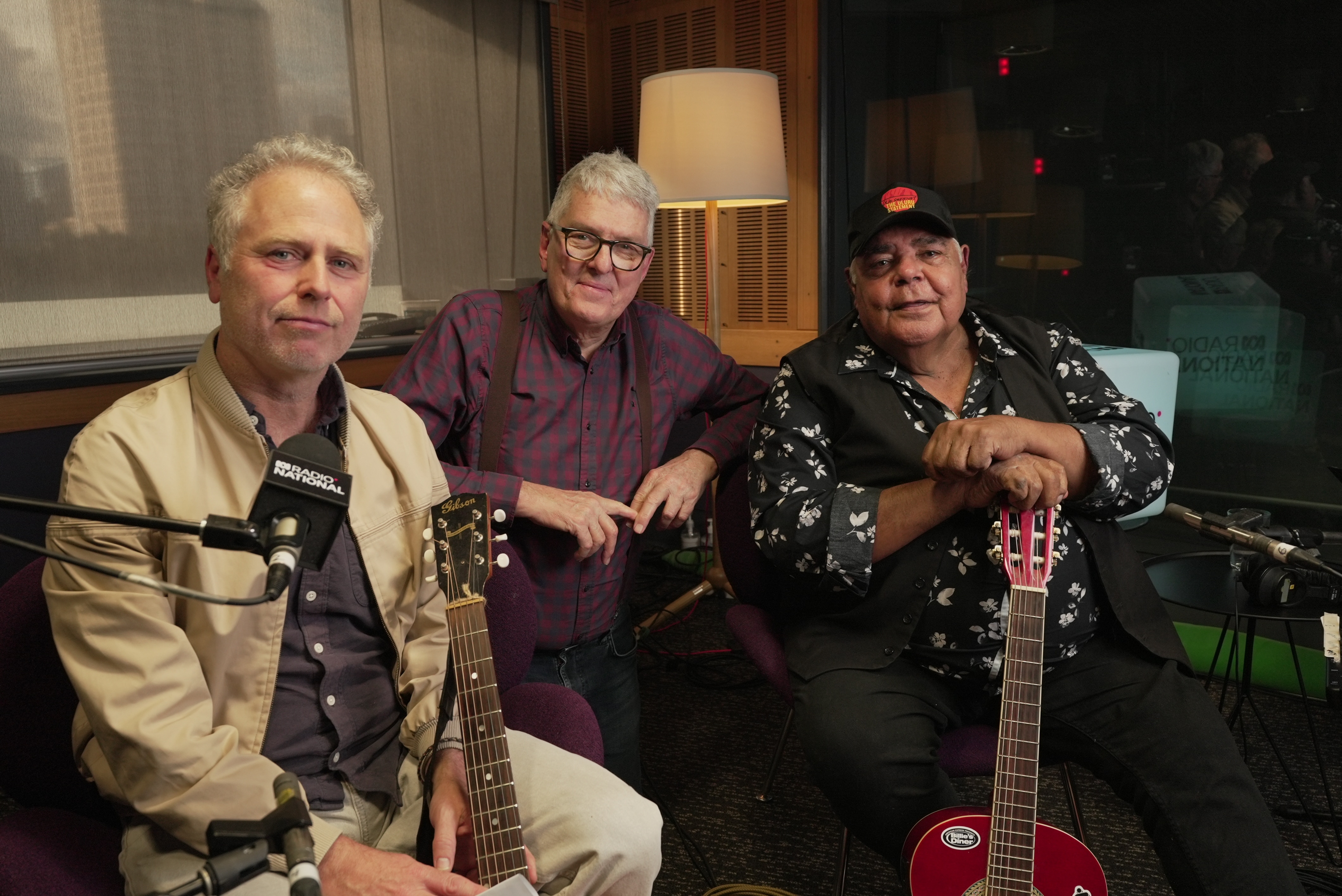
In 1895 Sydney solicitor Richard Meagher incited a campaign to free George Dean, a handsome, popular ferryman accused of attempting to poison his own wife, despite knowing he was guilty. The case became a scandal and Meagher was struck off. Meagher subsequently embarked on an ambitious political career, determined to hide this stain on his reputation and rebuild his life. Guest: Patrick Mullins, author of The Stained Man: a crime, a scandal, and the making of a nation, published by Scribe. Producers: David Marr and Catherine Zengerer
Transcript
Automatically generated from the audio. May contain errors.
Patrick Mullins announced his arrival as the best political biographer in this country by writing the life of one of our worst prime ministers, Billy McMahon. I was one of those who picked up a copy of Tiberius with a telephone and wondered why bother until I began to read Patrick's portrait of Billy McMahon and this country at the fag end of 20 years of
coalition rule. It won all the prizes and deserved to. Mullens has now written another beautiful biography of an unlikely figure. This time Richard Maher, a scandal-plagued Sydney lawyer turned politician around the time of Federation. He's what my mother would call one of the meagre Maher's, MEA, GHER, Irish, Catholic, no
relation. Maher's downfall and struggle to climb out of the pity dug for himself entertained the nation. Mark Twain, visiting Australia at the time, called it a two-volume novel in itself a tale worthy of Balzac. Well, Balzac, already dead, long dead by that time, has left the task to Patrick Mullins, who's now written The Stained Man, A Crime, A Scandal and The Making of
a Nation, just published by Scribe. Patrick, welcome to Late Night Live. Thanks, David. Why spend the years you've spent writing the life of this barely known man? I was intrigued by what I saw as the really contemporary parallels and resonances of his story. Over the last couple of years in particular I think we've had this kind of parade of
stained people, men who've done terrible things usually, and parade across the public stage afterward as though they're martyred and scapegoated and being persecuted. They turn kind of those marks of social censure into badges of honour. And when I found out about Moana, began reading about him,
all I could see were these constant echoes and resonances. So I thought this was a way to kind of understand how and why figures who've done terrible things managed to stay on the stage and to do so without inviting a libel suit, which is a pretty useful thing. Because God knows the man's been dead for nearly a century.
Patrick, when we're writing biography, it's always in a sense because it says something about today, isn't it? Isn't that why you write a biography? Yes, it talks about then, but it has to also talk about now.
Absolutely. I mean, biography, I think, is a really interesting genre for this very reason because the questions you ask of a subject constantly change.
I think some of the people who wrote about Ma in earlier years, like Cyril Pearl back in 1958 with Wild Men of Sydney, was asking different questions to the questions we have today. I was interested in this story for Ma about the contemporary parallels but also things like the role of gender and the way that informed Ma's actions and his disgrace. I was interested in the the nation-making
dimensions of his story as well, the way he managed to intertwine his cause with the making of this nation state. We always do write about the present and we always do understand the past through the lens of the present. And that's really a good reason why biographies shouldn't be left to stand alone. They should kind of be rewritten and rewritten over and over
again. And you know for any evidence of that you just look at the number of biographies of Churchill that we see. They're constantly being rewritten, constantly new questions and constantly new answers. For today. Absolutely. Okay, Dick Ma walks into a room. What do we see. We see a tall man, dark hair, thick set, big plump lips, a thin beaky nose and a very pronounced
philtrum. If you don't know what that word is, then it's the line between your lips and nose. He is very well dressed. He is also incredibly eloquent. He's grand eloquent in expression. His little sentences are grand. They march onwards in this kind of circuitous rhythms, but always to a beautiful full stop that rouses listeners and rouses juries.
His eloquence is one of the themes of this book and I wonder whether one thing has absolutely changed between then and now and that is the power of the great eloquent political address. So much part of that time, but not now. Absolutely. I mean, oratory is what Brotz has brought so many political figures to
prominence in this country. You know, you think of Alfred Deacon for example, he came to prominence first and foremost through his oratory just because he was such a good public speaker. And we're talking of course about a time when people were out and about in the streets, in meetings, going to parliament, going to the courts, in far more, you know,
plentiful number than they do today. And so that talent became really noticeable and it became a big part of how you could garner appeal. A journalist in the 1920s looking back on Mark kind of wrote that in Australia one thing you need to be successful
is the ability to talk. And Mark could talk and talk and talk and just keep talking. It is a real very big difference to today.
I think most of our politicians today speak in much shorter time spans and without as much depth and in some ways without as much color and fire Mark would bring to public meetings.
Because in those days, political addresses of these kind were a public entertainment. Absolutely. And they were alive to that. I mean, one of Mark's, you know, my favourite line that I found of Mark saying was when he
was rounding on a newspaper editor and he called him, you skunk, you scaly scruffulous bit of carrion, you can't grow eyebrows, you diseased creature. I mean, imagine hearing someone say that today, you know, in a courtroom or on a podium or something, you'd be, wow, you'd be rooted to the spot. And Jack Lang, you know, famously Labour Premier in the 1920s,
kicked out of office by the Great Depression, but pointed out that that's what people wanted. They wanted color in politics. They wanted that ferocity of daily language. And you know, if I might speculate for a moment, I think it's one of the reasons why Donald Trump is is something of a compelling presence because he just has that ability to speak so plainly.
This is the opening of the episode. Open the player for the full interactive transcript with clickable words, translation and flashcards.
Open full transcriptAudio belongs to its publisher and is played from their feed. Rights holders can request removal — copyright & takedown policy
Episodes · Late Night Live - Separate stories podcast