Maryland's plan for the AI future

Maryland's plan for the AI future

Marketplace Tech

B1June 4, 202619 min
Play

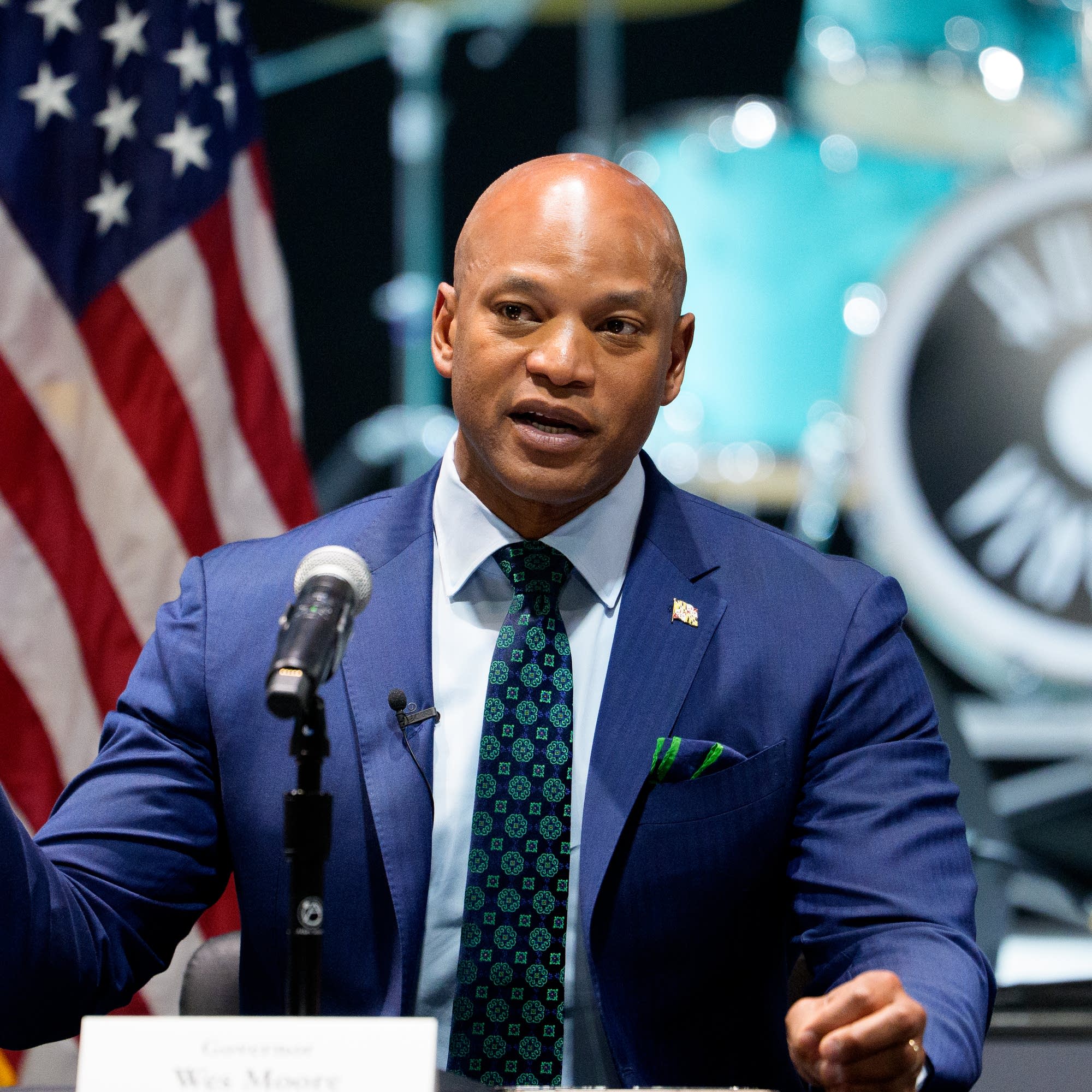
When a store offers different shoppers different prices depending on factors like the weather, the time of day, and what the store knows about each buyer, it’s called dynamic pricing. This spring, Maryland, became the first state to ban this practice in grocery stores. The state’s governor Wes Moore proposed the law. Marketplace’s Stephanie Hughes spoke with Gov. Moore at the statehouse in Annapolis about why he wanted this ban, his administration’s plans to train the state’s workforce for a future AI economy, and more.
Transcript

Automatically generated from the audio. May contain errors.

Hey, Ira Plato here from Science Friday. Each episode, we give you surprising facts. There's a whole phenomenon of moths visiting eyes of mammals. Expert insights.

It doesn't take a lot of brain to run a lion, actually. And we tackle the big questions. How is this going to affect the future? From space to climate to tech to medicine.

Get a new view on the world around you. That's Science Friday, wherever you get your podcasts. Maryland Governor Wes Moore on dynamic pricing, data centers, and how he uses AI. From American Public Media, this is Marketplace Tech.

I'm Stephanie Hughes. Earlier this week, I went from my home in Baltimore to Maryland's capital, Annapolis, the state house for a conversation with Maryland's Democratic government, Westmore. It's gorgeous out there, even though I haven't been outside all day today.

We talked a little weather, a little baseball, and then we got down to it, a conversation about technology, starting with dynamic pricing. This is when a store offers one shopper one price for an item and another shopper a different price.

That price can depend on the weather as well as the time of day and what the store knows about each shopper. This spring, Maryland became the first state to ban this practice in grocery stores. The law was proposed by Governor Moore, and I asked him why he wanted it.

Because we're seeing how average Marylanders were just getting hosed by these big corporations. Because what they were using is they're using your data against you. When I walk into a grocery store, they know what time you're coming in. They know what you are buying when you were there.

And for many Marylanders, they go to the grocery store at the same time, every single week, because that's the time that they have to shop for their families. And so what could then happen is they could use the data to where you would pay a different price than the person in front of you, because they knew they could increase the price

on you and they knew you'd pay for it. And so what we did was we said, that practice is illegal. That cannot happen. That I cannot pay a different price than the person in front of me and the person

behind me cannot pay a different price. And so by making it standard, saying like, if this is the price, that is the price. It was not only to become the first state in the country that was able to do that. I think we were able to really put these big corporations and these large supermarket chains

on notice that we're just not going to allow the price gouging to take place in the state of Maryland against our people. And this is the quick price changes either through electronic labels or when people are ordering online, they change the price depending on who you are.

Depending on who you are, depending on what your buying habits are, because they know that if they increase it by 10%, you're probably just going to pay it. You're probably not going to ask for much. And so that increase on that margin for that supermarket or for that corporation, we just

believe is not fair. That's not something that should be passed off to working families in our state. Why target grocery stores specifically? Because that's where we saw that a lot of that capacity to be able to do that was

happening. Because for a lot of people who are going into grocery stores, they know that there was not flexible. There was a whole lot of flexibility for them.

If a person is going into a grocery store at 6 p.m. on a Wednesday and they do that again next week and they do that again next week, that's probably because that's their hour. That's the time that they have.

That's where you have the least amount of flexibility for the consumer. That's where these corporations had the best chance of being able to fleece you. That's why we have said we want to go out to these supermarkets because that's when we saw the highest probability for that kind of manipulation.

What if a retailer wants to lower prices? Like say it's later in the day, they've got a bunch of peaches, they want to move the peaches. Does this law mean those peaches have to stay the same price?

No. So we actually have a carve out inside of the bill for things like loyalty programs. And so if you have something where you reward certain people and you say, well lower prices for certain individuals, you can do that.

What this bill is really targeting is the people who want to increase the prices. The people who say, well, the price for cereal was X, but by 6 p.m., the price for cereal is now X plus another 20 cents, because we know that that's the rush time and where we can actually squeeze more, you know, we can squeeze more profit out.

I want to shift to another topic in technology. Some would call it the big topic, artificial intelligence. Earlier this year, you announced a $4 million initiative to help train Marylanders to work in an economy shaped by AI.

What's the economy with that mutes? You know, it just knows that the AI revolution is here, and we have to be able to find ways of getting ahead on it. I look at what's going on in the larger economy in our country and around the world, where

we have seen how the stock market has continued to hit record highs, primarily driven on the NASDAQ, primarily driven by like seven different companies. And you've seen this dynamic where company profit is skyrocketing, but also unemployment is going up.

That dynamic usually historically never accompanied each other. But it's happening now, and it's not just happening over a month period. We're now seeing that now over a six and eight month period. That same dynamic.

That is AI. That is watching how companies like Meta is having record profit, but also is laying off 15,000 people. I think AI can be revolutionary when it comes to education.

I think it's revolutionary when it comes to healthcare. I think it can be revolutionary when it comes to public safety. I also know it's a deeply powerful technology. And if we are not coming up with ways to be able to prepare our workers for it,

This is the opening of the episode. Open the player for the full interactive transcript with clickable words, translation and flashcards.

Open full transcript

Audio belongs to its publisher and is played from their feed. Rights holders can request removal — copyright & takedown policy

Episodes · Marketplace Tech